

25-09-2026, Friday of Twenty Fifth Week in Ordinary Time
Eccl 3: 1-11; Ps 144: 1-4; Lk 9: 18-22
(APPOINTED TIME – זְמָ֑ן ZEMAN – καιρὸς KAIROS)
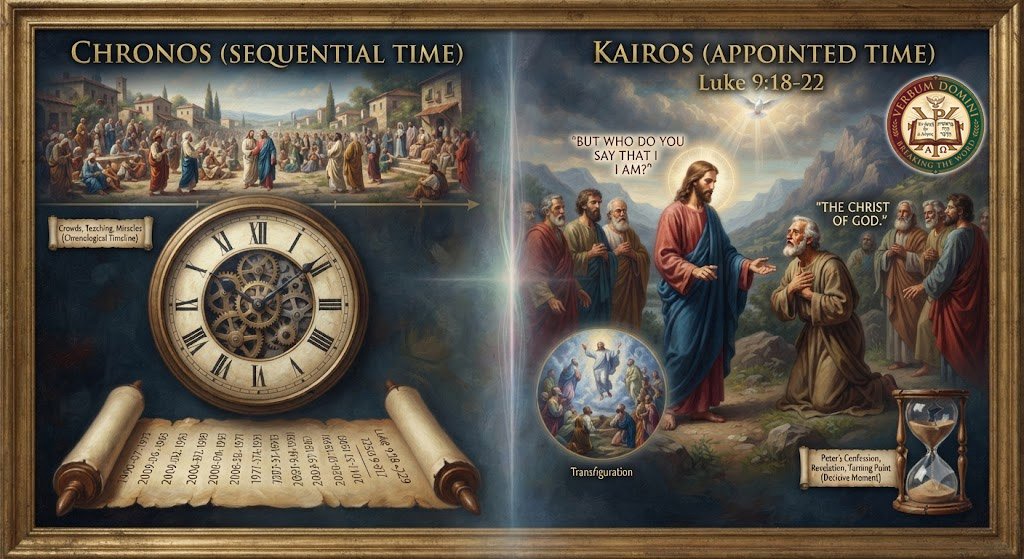
In biblical Greek, time is often divided into two concepts: chronos (clock time, sequential chronology) and kairos (the appointed, decisive time of God’s action; an opportune moment pregnant with eternal significance). In Ecclesiastes 3:1, the Hebrew text uses zeman meaning a designated or appointed time, a fixed season. When the Hebrew Bible was translated into Greek, zeman was translated Kairos (καιρός). Ecclesiastes 3:11 implies that God orchestrates events so that they fit perfectly into a master design. This echoes with dei (“it is necessary”), that there is a divinely appointed time for dying, breaking down, and weeping. Jesus applies this directly to Himself: it is fitting (dei) for the Son of Man to suffer, be rejected, and be raised on the third day.
Luke introduces the scene by noting that Jesus was praying in solitude before asking the question. This solitary prayer marks the crossing of a threshold. Jesus recognizes that the chronos of His ministry – months of teaching, healing, and gathering crowds – has arrived at a critical kairos moment. The veil must be pulled back. The Christ of God,” is a kairos breakthrough. It is a moment granted by divine grace where human perception pierces through earthly veils to grasp heavenly truth. It represents an acute, unrepeatable turning point in the disciples’ formation; they can never un-know or un-see who Jesus is. Immediately after this breakthrough, Jesus introduces the word dei (“it must”). This ties the kairos of revelation directly to the kairos of redemption. Suffering and resurrection are not random future events on a calendar (chronos); they are the supreme, appointed fulfillment of God’s rescue mission.
Insights from the Church Fathers
“He speaks of His passion and cross as a necessity (‘The Son of Man must suffer’) to teach us that no one can truly be crowned unless he has first lawfully striven. The cross is the royal road; it is the path mapped out for everyone who desires to follow Him in truth, clearing away our earthly illusions of a cheap and comfortable glory.” – Saint Bede the Venerable
“Peter called Him ‘The Christ of God’ because the Father had revealed it to him. Yet, immediately after being given the keys of faith, he stumbled at the mention of the Cross. This teaches us that human wisdom shrinks from suffering, but divine wisdom embraces the mystery of redemption through the wounds of Christ.” – Saint Augustine of Hippo
Insights from the Carmelites
“I wish I could help you find consolation near the Cross. In its shadow, every kind of bitterness fades. No one has suffered like Jesus has…” – Saint Thérèse of Lisieux
“The soul that truly loves God loves Him just as much in suffering as in joy, and if it must choose, it prefers trials to consolations, knowing that this is more pleasing to the Beloved and more profitable to itself.” – Saint John of the Cross
Insights for Us
We easily confess Jesus as Lord when life is comfortable, prayers are answered smoothly, and circumstances favour us. Yet, Jesus forces us past public opinion (“Who do the crowds say that I am?”) into deeply personal territory: “Who do you say that I am?”
In our daily lives, taking up the cross looks like: Embracing ordinary friction, sacrifices, and duties without bitterness. Remaining faithful to Christ’s teachings even when we face modern forms of rejection, misunderstanding, or marginalization from secular culture. Trusting that any “necessary suffering” or difficult season we endure is intimately wrapped in the divine plotline of resurrection and transformation.
Whatsapp channel: https://whatsapp.com/channel/0029VbCwzvh3QxS6zJTriv0E
Website: https://verbum.carmelmedia.in/