

14-09-2026, Feast of the Exaltation of the Holy Cross
Monday of Twenty Fourth Week in Ordinary Time
Nm 21:4-9 / Phil 2: 6-11 Ps 78: 1-2, 34-38 Jn 3: 13-17
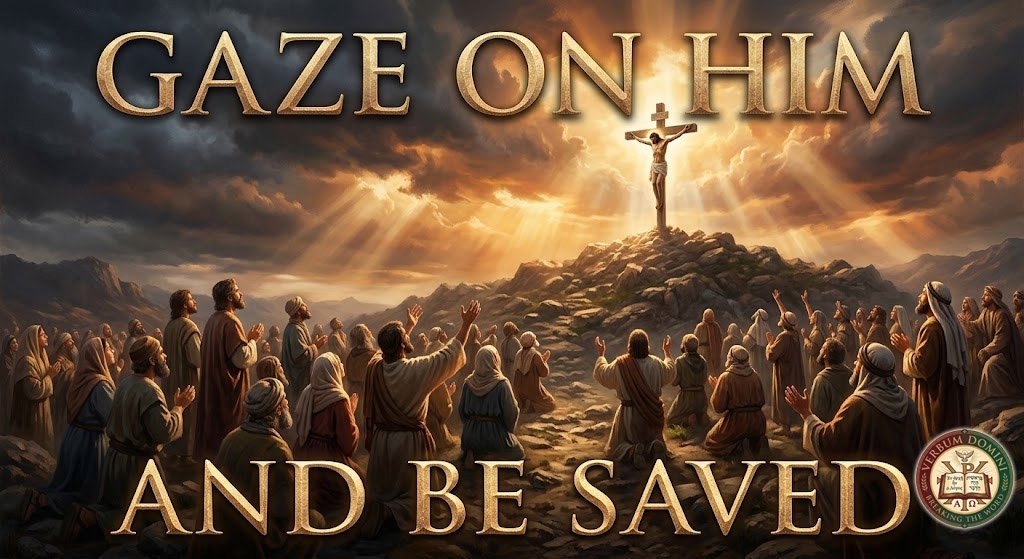
On September 14, the Church celebrates the Feast of the Exaltation of the Holy Cross, also known as the Triumph of the Cross. On this day, we remember both the discovery of the True Cross of Christ and its later recovery, but more importantly, we celebrate what once appeared to be an instrument of defeat and death and yet became the means of victory and salvation.
There is a choice for the first reading
1. The Hebrew Desert (Numbers 21:4–9)
In the wilderness, the Israelites grow impatient and speak against God and Moses. In response, God sends venomous serpents, designated in Hebrew as הַנְּחָשִׁים הַשְּׂרָפִים (ha-nəḥāšîm haś-śərāpîm).
- The Burning Death: שׂ-ר- The śərāpîm are literally “the burning ones”, referring to the searing inflammation and thirst caused by the venom, as well as the fiery brilliance of judgment.
- The Sign: Moses is commanded to fashion a serpent of bronze: נְחַשׁ נְחֹשֶׁת (nəḥaš nəḥōšet).
- The Healing Gaze: Moses sets it upon a pole. A nēs in the Hebrew Bible, signifies a military ensign, visible from afar. The verb for looking upon it is רָאָה (rā’āh) is not a casual glance, but an intentional gaze of faith and submission. The very symbol of their judgment and death becomes, when elevated and looked upon, restoration of life.
2. The Pauline Kenosis (Philippians 2:6–11)
This reading outlines a divine trajectory composed of two radical movements: descent (kenōsis) and ascent (hyperypsōsis). Descent, since Christ did not view equality with God as something to be grasped or exploited, but emptied Himself, taking the form of a slave). Ascent, because Christ descended to the lowest depth, God “hyper-exalted” Him, conferring the name above every other name (Kyrios). The cross is not the obstacle before Christ’s exaltation; it is the means and locus of it.
3. To Be Lifted Up Hypsōthēnai (John 3:13–17)
When Jesus speaks to Nicodemus, he seizes upon the wilderness event: “And just as Moses lifted up the serpent in the desert, so must the Son of Man be lifted up (hypsōthēnai), so that everyone who believes in him may have eternal life.” (John 3:14–15)
In the Greek text of John’s Gospel, the verb ὑψόω (hypsoō, “to lift up / exalt”) carries a profound double meaning:
- The Physical Crucifixion: The mechanical raising of Jesus’ body onto the vertical beam of the cross.
- The Glorious Exaltation: His enthronement and ascension to the right hand of the Father (drawing from Isaiah 52:13, where the Suffering Servant is said to be hypsōthēsetai—”exalted”).
John sees no separation between the agony of Golgotha and the glory of the Resurrection. The Cross is the enthronement.
Just as the Israelites had to gaze upon the bronze serpent to neutralize the deadly poison of the śərāpîm, humanity looks with faith upon the Crucified One to neutralize the ancestral venom of sin and mortality (thanatos). Salvation is not an abstract theory; it requires the posture of the desert wanderers. To celebrate the Exaltation of the Cross is to look (rā’āh) upon the Crucified (hypsōtheis) with eyes of faith, recognizing that God’s omnipotence is most perfectly revealed not in violent domination, but in the radical vulnerability of self-emptying love (agapē).
BONUS – Church Fathers on these readings:
- Augustine (The Snake Without Venom): A bronze snake looks exactly like a real snake, but has no poison inside. Similarly, Jesus took on real human flesh, but had no sin. By stepping into death without deserving it, he destroyed death from the inside out.
- John Chrysostom (The Greater Cure): Moses’ bronze snake was just a shadow of the real thing. It only healed physical bites, and those people eventually died of old age anyway. Jesus cures the poison of sin itself and gives life that never ends.
- Gregory of Nyssa (The Dead Monster on Display): In ancient times, hanging an enemy on a pole proved they were defeated. Gregory sees the snake pinned to the wood as proof that evil, death, and temptation have been neutralized. Looking at the cross reminds the believer that the monster is already dead.