

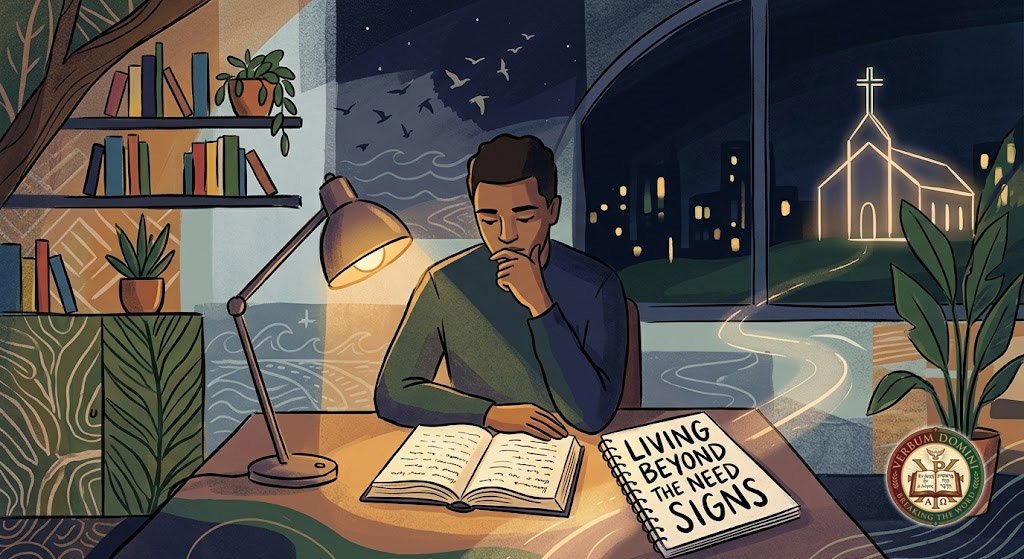
12-10-2026, Monday of Twenty Eighth Week in Ordinary Time
Gal 4: 22-24,26-27,31–5:1; Ps 113:1-7; Lk 11: 29-32
The crowds got even bigger (were massing together. Luke uses Ἐπαθροιζομένων (epathroizomenōn – massing together / pressing closely), a compound verb which incorporates epi (upon) and athroizō (to assemble, throng). This reflects that the people pressed against Him not out of hunger for righteousness, but driven by spectacle, curiosity, and consumeristic spiritual appetite.
Σημεῖον (semeion – sign) vs. Τέρας (teras – wonder) They ask for a sign, a trick, or a display of raw power, something pointing to a transcendent divine reality. The tragedy of this generation is that they demand this sign on their own terms, reducing God to a performer. Jesus therefore replies that no sign will be given except the sign of Jonah: the mystery of dying, burial, and deliverance, culminating in the Resurrection and the call to radical repentance.
The Ninevites repented (metanoeō). Metanoia is not emotional remorse; it is a total transfiguration of mind, heart, and gaze away from self-governance toward the sovereignty of God. The pagan Ninevites and the Queen of the South (Sheba) possessed no covenant, yet they moved across geographies to metanoia.
How often do we find ourselves, crowding into church or retreat centre, yet bargaining with God for signs? We say, “Lord, give me a feeling of your presence, resolve this uncertainty with an unmistakable indicator, send an exterior confirmation, and then I will surrender.” Christ looks at our generation and gives the same response: The sign has already been given. It is the Sign of Jonah, the sign of the Cross and the empty tomb. In the sacraments and the Gospel, Christ is already present.
The Queen of Sheba undertook a punishing desert journey simply to hear the mortal wisdom of Solomon. The Ninevites donned sackcloth and ashes at the voice of a reluctant prophet who worked no miracles in their streets. Yet we, who have the Lord of Glory residing within our churches, an having received the sacraments of Baptism and Holy Eucharist, remain hesitant, demanding that God prove Himself again.
Insights for Life
Unbelief is rarely an intellectual deficit; it is an unwillingness to undergo metanoia. We ask for signs because signs keep God at arm’s length as an object of evaluation, whereas conversion demands that we surrender our sovereignty and climb onto the wood of the cross.
Cease demanding emotional consolations or miraculous confirmations before you choose obedience. When discerning, do not wait for lightning from heaven. Act on the revealed Word of God.
Practice Daily Metanoia. Examine where your mind has drifted into complacency. Repentance is an everyday reorientation: turning away from digital noise, bitter grudges, and self-justification, and realigning your day with the Gospel.
Find God in your life. Remind yourself at every Mass and in every quiet moment before the tabernacle, that something greater than the temple, greater than Solomon, greater than all worldly glory is here. Approach the mundane moments of life knowing Christ is intimately present within your soul.
Insights from the Church Fathers
“For neither did the Ninevites believe on the strength of signs, but upon hearing words only did they achieve all that they did. And this too, when the prophet had neither displayed miracles, nor brought with him any sign from heaven… But these men, having seen many signs, were not converted, but still demanded another.” – Saint John Chrysostom (Homilies on the Gospel of Matthew)
“The Queen of the South did not ask to see miracles, but longed to hear the wisdom of Solomon. But you, though Wisdom Itself is conversing with you, seek signs from heaven. Therefore, she who was a barbarian will rise up and condemn the Israelite.” – Saint Cyril of Alexandria (Commentary on Luke)
Insights from the Carmelite Tradition
“Do not imagine that the soul needs to see visions to be near to God. This is what love is: not that we should have high emotions, but that we should serve in justice, in fortitude of soul, and in humility… The foundation of this whole edifice is humility.” – Saint Teresa of Avila (The Interior Castle, Seventh Mansions, 4)
“In giving us His Son, His only Word, He has spoken everything to us at once in this sole Word—and He has no more to say… If someone were now to ask God for visions or revelations, they would not only be foolish, but would offend Him, by not fixing their eyes entirely upon Christ, without desiring any other new thing.” – Saint John of the Cross (The Ascent of Mount Carmel, Book II, Ch. 22)
Whatsapp channel: https://whatsapp.com/channel/0029VbCwzvh3QxS6zJTriv0E