

05-09-2026, Saturday of Twenty Second Week in Ordinary Time
1 Cor 4: 6-15; Ps 145: 17-21; Lk 6: 1-5
ἔξεστιν (Gk) (exestin) (Lawful) (Lk 6:2,4)
The Word to reflect today is from today’s Gospel passage according to Luke (6:1-5). The word ἔξεστιν literally means permitted or lawful. The NRSV translates the word as lawful, “Why are you doing what is not lawful… (v. 2)” and “…which it is not lawful for any but the priests, (v. 4)”.
Luke is the only evangelist who describes the action of the disciples as psōchontes (rub down the grain between the palms to separate kernel from husk), while the other gospels only mention that the disciples plucked the ears of corn (Mk 2:23, Mt 12:1). Plucking heads of standing grain by hand was explicitly legal under Mosaic law to alleviate hunger (Deut 23:25). However, Rabbinic oral tradition classified plucking as harvesting and rubbing between the hands as threshing or winnowing, two of the thirty-nine forbidden categories of work on the Sabbath. Luke tries to capture the trivial, instinctive action of hungry men being magnified into a technical violation of the law.
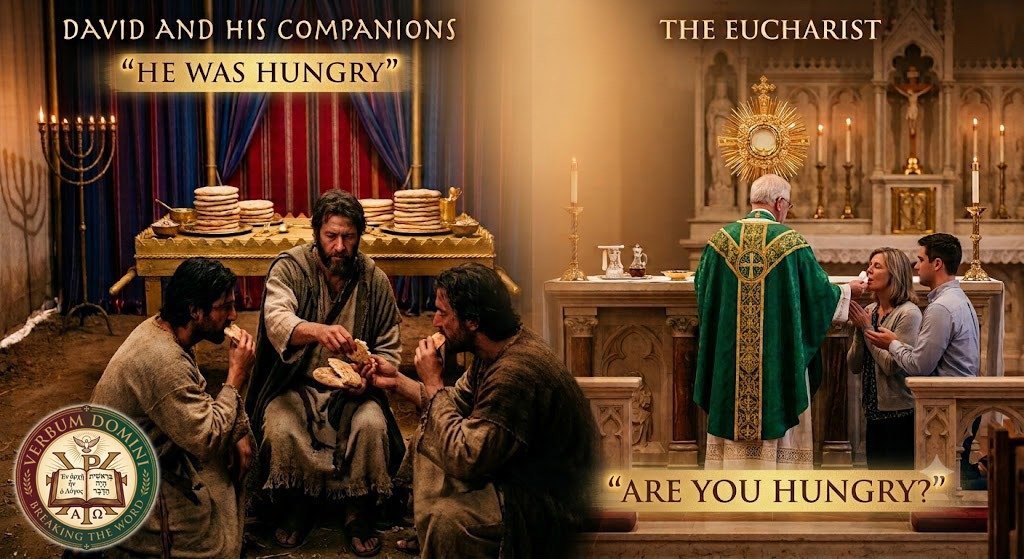
The Pharisees demand: “Why are you doing what is not exestin? When Jesus responds, he turns exestin back on them by refering David eating the bread of the Presence, which was not exestin for anyone except the priests to eat (Lev 24:5-9). Jesus demonstrates that sacred ceremonial prescriptions yield when human life and sustenance are at stake. Jesus grounds David’s action in genuine bodily need: David acted when he and those with him were hungry. By linking David’s band to his own disciples, Jesus shows that the Sabbath was never intended as a trap of enforced deprivation, but as an instrument of divine mercy and restoration.
The climax is heightened when Jesus says: “The Son of Man is Lord even of the Sabbath”. By declaring Himself Kyrios over the Sabbath (the very God who instituted the Sabbath at Creation (Gen 2:2-3) and commanded it at Sinai (Ex 20:8-11)), Jesus does not discard the Sabbath; He asserts divine authority to interpret its true purpose. The Pharisees saw the Sabbath as an anxious obstacle course where righteousness was measured by strict avoidance. They turned a God of abundance into a hyper-vigilant inspector. They could see the infringement of an oral law, but were blind to basic human hunger.
God instituted ritual and Sabbath rest to protect human beings, foster life, and orient creation toward redemption. Whenever a religious boundary becomes an engine of cruelty or neglect, it has inverted its divine mandate. True Sabbath is found in entering the presence of the Lord who feeds the hungry, releases burdens, and gives rest.
Do you celebrate the Eucharist, because it is a commandment, obligation? Or do you go to God, to be fed, for you are hungry? Do you go to God, to find rest, for you are weary?